







In a world where Wi-Fi signals seem to have a mind of their own, network cabling emerges as the unsung hero of connectivity. It’s the sturdy backbone that keeps businesses running smoothly, ensuring that data zips through like a caffeinated squirrel. Without the right cabling, even the fastest internet can feel like it’s stuck in rush hour traffic.
Overview Of Network Cabling
Network cabling comprises various types of cables and connectors essential for data transmission in a network. Twisted pair cables represent one of the most common types, often used in office environments. These cables, notably Category 5e and Category 6, provide a balance of speed and cost-effectiveness for most businesses.
Fiber optic cables also play a significant role, offering higher speeds and longer distances. They’re crucial for backbone infrastructure in large organizations. Coaxial cables, although less common, maintain relevance in specific contexts, such as internet service provision or cable television connections.
Cabling infrastructure encompasses more than just cable types; installation and management are equally vital. Structured cabling systems ensure organized and efficient layouts, simplifying future upgrades and troubleshooting processes. This structure minimizes potential signal interference, ensuring high data integrity.
Standards govern the performance and installation of network cabling. The Telecommunications Industry Association (TIA) and the International Organization for Standardization (ISO) set these frameworks, promoting interoperability among devices. Following these standards helps maintain consistent quality and performance across various network setups.
Regular maintenance strategies support long-term performance for network cabling. Inspections identify wear and degradation, ensuring connections remain secure. Upgrading outdated cabling directly impacts network speed and reliability, making it essential for organizations to evaluate their infrastructure periodically.
Robust network cabling not only enhances connectivity but also prepares businesses for future demands. With the rise of smart technologies and increased data traffic, strong cabling foundations remain critical for efficient operations. Properly installed and maintained network cabling guarantees seamless connectivity, directly impacting overall business functionality.
Types Of Network Cabling
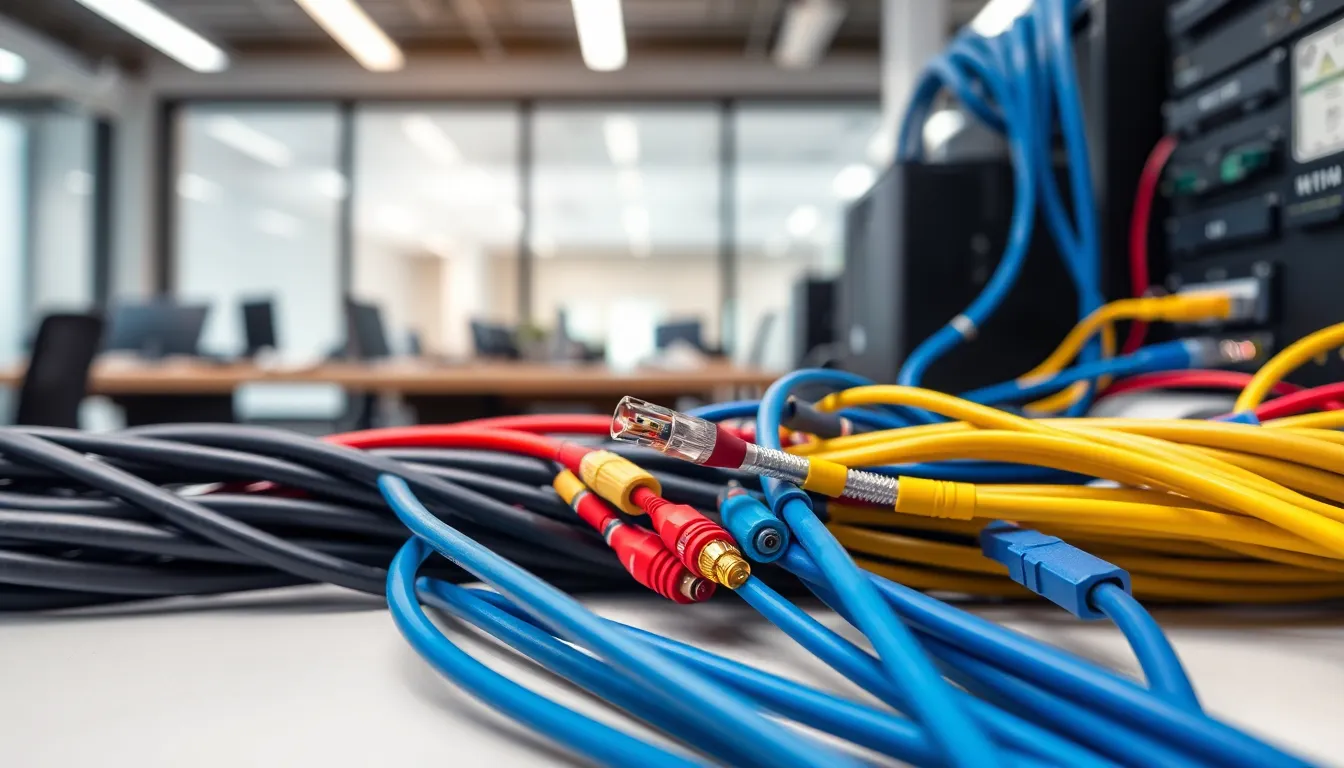
Network cabling systems consist of different types, each serving specific purposes based on needs and environments. Understanding these varieties aids in selecting the right solution for effective connectivity.
Twisted Pair Cabling
Twisted pair cabling remains a popular choice in many office settings. This type includes two insulated copper wires twisted together to reduce interference. Category 5e cables support speeds up to 1 Gbps, providing adequate performance for standard applications. Category 6 cables enhance bandwidth efficiency, accommodating data rates of up to 10 Gbps over short distances. Both variations offer cost-effectiveness and ease of installation, contributing to their widespread adoption in network systems.
Coaxial Cabling
Coaxial cabling serves distinct functions, mainly in television and internet distribution. This type consists of a central conductor surrounded by insulation, a metallic shield, and an outer coating. Coaxial cables support high-frequency signals, ensuring reliable transmission for cable TV and broadband services. Despite being less common in modern data networks, they remain essential for specific applications due to their durability and resistance to signal interference.
Fiber Optic Cabling
Fiber optic cabling stands out for its superior speed and bandwidth capabilities. Composed of thin strands of glass or plastic, these cables transmit data through light signals. Fiber optic technology supports high-speed connections over long distances, making it ideal for large organizations or data centers. Additionally, they enable future-proofing against growing data demands. Organizations prioritizing performance often choose fiber optics to enhance their infrastructure, preparing for evolving technological landscapes.
Installation Considerations
Effective network cabling installation requires careful planning and consideration of various factors. Proper execution ensures optimal performance and reliability for data transmission.
Planning The Layout
Developing a strategic layout is crucial before installation begins. Organize workstations and network devices based on usage needs. Identify ideal routing paths to minimize cable lengths and avoid interference from electrical components. Consider aesthetic elements while maintaining accessibility for future upgrades. Evaluate the structure of walls and ceilings to determine the best cable management solutions. Create a diagram that reflects both existing connections and planned expansions.
Tools Required
Gathering the right tools simplifies the installation process. Essential tools include a cable tester, to verify signal integrity, and a crimping tool, for attaching connectors to cables. Use a wire stripper for preparing cables and a punch-down tool for connecting wires to patch panels. A cable management system organizes cables neatly, reducing clutter and ensuring ease of maintenance. Labeling tools also enhance future troubleshooting and upgrades, ensuring clear identification of cable endpoints.
Common Mistakes To Avoid
Awareness of common installation errors helps prevent costly setbacks. First, avoid over-tightening cables, which can damage the internal wires and degrade performance. Second, neglecting to follow TIA and ISO standards can lead to uneven signal quality. Identify and mitigate potential sources of interference, such as electrical equipment or devices operating on similar frequencies. Lastly, ensure proper documentation of the network layout, as this aids future modifications and maintenance efforts.
Maintenance And Troubleshooting
Effective maintenance and troubleshooting of network cabling ensures reliable connectivity and optimal performance. Regular checks and inspections help identify potential issues before they escalate.
Regular Checks And Inspections
Routine inspections improve the longevity of network cabling. Inspect connections at network devices for signs of wear or damage. Cables should be examined for physical defects, such as kinks or fraying. Monitoring temperatures in server rooms prevents overheating, which can affect cable integrity. Performing continuity tests on cabling identifies any interruptions in signal flow. Following a maintenance schedule maximizes uptime and enhances network reliability.
Diagnosing Common Issues
Identifying and diagnosing common network cabling issues streamlines problem resolution. Symptoms like slow internet connectivity often indicate faulty cabling. Conducting tests with cable testers reveals issues such as miswiring or faulty connectors. Poor performance might stem from electromagnetic interference, which requires repositioning or shielding cables. Utilizing network monitoring tools helps pinpoint bandwidth bottlenecks and highlights problematic areas. Understanding these signs enables swift corrective action, maintaining an efficient network environment.
Future Trends In Network Cabling
Emerging trends in network cabling signal a shift towards more advanced technologies and solutions. Innovations in fiber optic technology enhance speed and data transmission capabilities, pushing the boundaries of bandwidth. Organizations increasingly adopt high-performance cabling to accommodate growing data demands driven by IoT and cloud computing.
Increased adoption of category 6A and category 7 cables reflects the need for greater speed and reduced interference. These enhanced twisted pair cables support faster data rates, making them suitable for modern office environments. Businesses invest in structured cabling systems, ensuring organized layouts that facilitate seamless upgrades.
Integration of Power over Ethernet (PoE) technology stands out as a game changer. This innovation allows cabling to deliver both data and power simultaneously, simplifying installations and reducing the need for separate wiring. PoE contributes to energy efficiency, making it an attractive option for powering devices such as IP cameras or wireless access points.
Sustainability trends promote the use of eco-friendly materials in cabling solutions. Renewable resources and recyclable components are increasingly favored, appealing to organizations focused on reducing their environmental footprint. These practices not only enhance corporate responsibility but also often lead to cost savings in the long term.
Adoption of automation and smart technologies for monitoring network cabling is gaining traction. Advanced systems can detect faults or performance issues in real time, facilitating quick responses and reducing downtime. Such proactive maintenance strategies ensure network reliability, critical for business operations in today’s digital landscape.
Organizations stay ahead of the curve by investing in these future-focused cabling trends, securing their infrastructure against evolving demands. Each step aligns with the goal of optimizing performance, scalability, and sustainability in network environments.
Network cabling is essential for maintaining reliable connectivity in a world that increasingly relies on digital communication. By investing in the right cabling infrastructure and adhering to industry standards, organizations can ensure optimal performance and future-proof their networks.
Regular maintenance and troubleshooting are crucial for addressing potential issues before they impact operations. As technology evolves, embracing innovations like fiber optics and Power over Ethernet will enhance data transmission capabilities and energy efficiency.
Ultimately, a well-planned and managed network cabling system not only supports current needs but also positions businesses to adapt to future challenges in an ever-changing digital landscape.