







Imagine a world where devices connect as easily as two friends sharing a secret handshake. Welcome to WiFi Direct, the unsung hero of wireless connectivity. This nifty technology lets devices link up directly without the need for a router, making file sharing and streaming a breeze. It’s like having a personal WiFi party—no bouncers allowed!
Overview of WiFi Direct
WiFi Direct allows devices to connect directly without using a router. This technology provides convenient solutions for file sharing and streaming among compatible devices. Users experience fast data transfer rates, often exceeding several megabits per second.
Compatibility extends to various devices, including smartphones, tablets, printers, and smart TVs. Many manufacturers have integrated WiFi Direct into their products, enhancing user interaction and accessibility. With WiFi Direct, it’s possible to share files and stream media seamlessly, promoting a hassle-free digital environment.
An important feature is the establishment of a peer-to-peer connection. This connection enables devices to communicate and share resources directly. Security protocols such as WPA2 ensure that connections remain secure during data transmission.
Ease of use is another advantage. Users can initiate connections through simple menu options, often requiring just a few taps. No intricate setup or technical knowledge is necessary, making WiFi Direct accessible to everyone.
Devices can connect without an internet connection or external network. This independence from traditional networks allows users to share content anytime and anywhere. WiFi Direct creates a flexible and efficient way to engage with multiple devices.
WiFi Direct stands out for its simplicity, speed, and compatibility. Embracing this technology enhances the overall user experience in file sharing and media streaming, showcasing its potential for everyday digital interactions.
How WiFi Direct Works
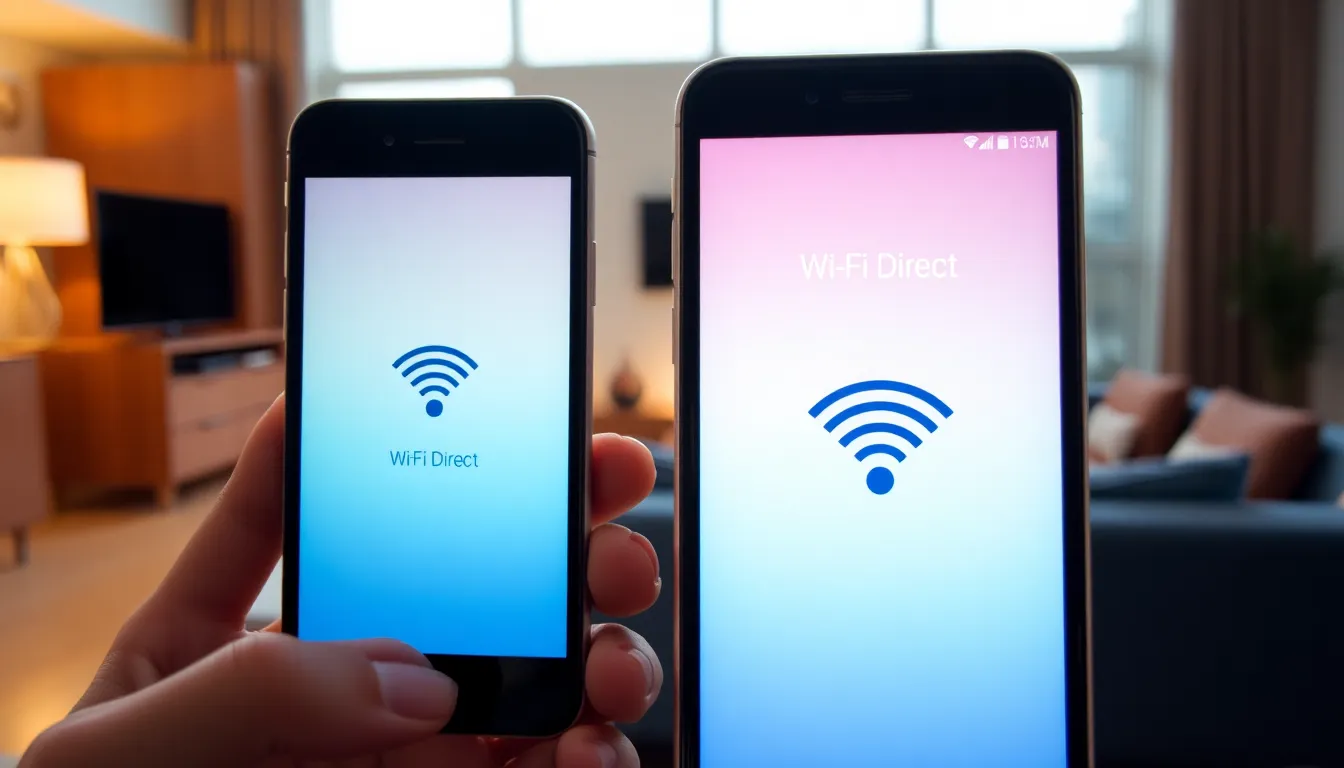
WiFi Direct simplifies device connections, allowing seamless communication without a router. This technology employs specific steps for device discovery and connection establishment.
Device Discovery
Device discovery initiates the connection process between compatible devices. Devices automatically search for each other using WiFi Direct protocols. Once a device identifies another, it presents options for connection. The discovery phase typically occurs within a range of around 100 meters, depending on environmental factors. Devices show up on available lists, enhancing user interaction. User intervention can guide the process, ensuring that only desired devices connect. This feature enables quick recognition of nearby devices, making it easy for users to select and connect.
Connection Establishment
Connection establishment follows successful device discovery. Upon selection, one device briefly becomes the Group Owner, managing the connection. The Group Owner utilizes established protocols like WPA2 for secure connections, ensuring data protection during transfer. Users can enter a PIN or accept a connection prompt, simplifying the setup. Speedy connections allow for immediate access to files and media sharing. This process typically takes only a few seconds, maintaining the user-friendly focus of WiFi Direct. Effortless connectivity enhances user experiences, making it ideal for various applications like streaming and file sharing.
Advantages of WiFi Direct
WiFi Direct offers several advantages that enhance user experiences, making it a preferred choice for many. These features include speed and performance, along with ease of use.
Speed and Performance
WiFi Direct provides rapid data transfer rates, frequently exceeding 250 Mbps. Such speed allows seamless streaming of high-definition videos and swift file transfers, cutting down wait times significantly. Lower latency further improves real-time interactions, appealing to users seeking fast connectivity. Whether sharing large files or enjoying media, the performance of WiFi Direct stands out. Notably, the ability to connect multiple devices without sacrificing speed contributes to its efficiency. Users experience reliable connections even over distances of around 100 meters, making WiFi Direct suitable for various applications.
Ease of Use
Connecting via WiFi Direct remains straightforward and user-friendly. Simple steps allow users to initiate connections with just a few taps. Users can discover compatible devices automatically, eliminating the need for complex setups. The option to connect using a PIN or a simple acceptance prompt enhances convenience. Quick connections typically take only seconds, simplifying the sharing process. Additionally, no internet access or router is required, allowing users to share files and stream media anytime. Overall, the intuitive design of WiFi Direct makes technology accessible to everyone, regardless of technical expertise.
Use Cases for WiFi Direct
WiFi Direct offers various practical applications, particularly in file sharing and streaming entertainment. This technology facilitates effortless connections between devices.
File Sharing
File sharing becomes seamless with WiFi Direct. Users can transfer photos, documents, and videos quickly without using cables or external networks. Transfer speeds often exceed 250 Mbps, ensuring large files reach their destinations efficiently. Multiple devices can connect simultaneously, allowing users to share content with friends and colleagues in real-time. Compatibility across smartphones, tablets, and printers enhances its versatility. Just a few taps lead to effortless sharing experiences, making WiFi Direct ideal for collaborative projects or personal exchanges.
Streaming and Gaming
Streaming and gaming applications benefit significantly from WiFi Direct’s low latency and high-speed connectivity. Users can stream high-definition videos to smart TVs directly from their mobile devices, enhancing viewing experiences without interruptions. Gaming consoles also leverage this technology, enabling quick connections for multiplayer gaming sessions without lag. Speed contributes to a smoother gaming experience, essential for real-time interactions. Additionally, connecting multiple devices without compromising quality supports the growing demand for shared media experiences. Overall, WiFi Direct transforms how users enjoy entertainment, providing convenience and efficiency.
Limitations of WiFi Direct
WiFi Direct offers numerous benefits, but it also comes with limitations that users should consider.
Range and Interference
Range is a significant factor in the effectiveness of WiFi Direct. Devices typically operate within a distance of about 100 meters, but physical obstacles can reduce this range. Walls, furniture, and other interferences may disrupt signals, leading to slower speeds. Interference from other devices, like microwaves and Bluetooth devices, can also hinder performance. These environmental factors can affect data transfer rates and connectivity stability. Additionally, while connecting multiple devices is possible, range limitations might affect their performance as well.
Security Concerns
Security poses a challenge for WiFi Direct users. Although it employs WPA2 for encryption, vulnerabilities exist that could expose information. Device pairing requires user action, but unprotected connections can still occur. Unauthorized devices might gain access if users aren’t vigilant about pairing. Moreover, since connections function without a central router, monitoring traffic becomes difficult, raising security concerns. Encouraging users to stay alert and follow best practices helps mitigate these risks effectively.
WiFi Direct offers a revolutionary approach to device connectivity by enabling direct peer-to-peer connections. This technology simplifies file sharing and streaming while delivering impressive speeds and low latency. Users can enjoy seamless interactions with their devices without relying on a router or internet connection.
Though it presents some limitations such as range and security concerns, the benefits of WiFi Direct are substantial. Its user-friendly setup and compatibility with various devices make it a valuable tool for modern digital experiences. As technology continues to evolve, WiFi Direct stands out as a convenient solution for users seeking efficient ways to connect and share.